Ancient Maya Religion
Maya religiosity is one of the most studied of those originating in the Americas, as the Maya left behind abundant archaeological material, from temple-cities to mysterious stepped pyramids and tombs, as well as a complex hieroglyphic writing system.

Source: Wikimedia Commons. CC BY-SA 4.0.
Maya civilization was located in southeastern Mexico, Yucatán, Belize, Guatemala, and as far as parts of El Salvador and Honduras. From what has been possible to learn, everything seems to indicate that the Maya religion was oriented toward ensuring the fertility of the land in the production of maize. It is also known that there existed a priesthood with extensive knowledge of mathematics and astronomy, which allowed them to develop a calendar more accurate than the Gregorian one.
The Maya believed that the universe had thirteen upper levels and nine lower levels, and that there existed a conflict or struggle between the upper and lower levels. The upper levels were represented by the deities that brought fertility, while the lower ones were the cause of death, war, and famine.
The supreme deity was Itzamna, but there were other gods such as Chac, Ah Mun, Xamen Ek, and a sinister god or bearer of death known as Cizin.
Some of the information about Maya religion has come down to us through a sacred text written in colonial times known as the Popol Vuh. This traditional text, clearly influenced by the biblical tradition, was composed by the Indians who inhabited the Quiché region and recounts the origin of the world and the creation of man, as well as the exploits of the mythic heroes Hunahpú and Ixbalanqué.
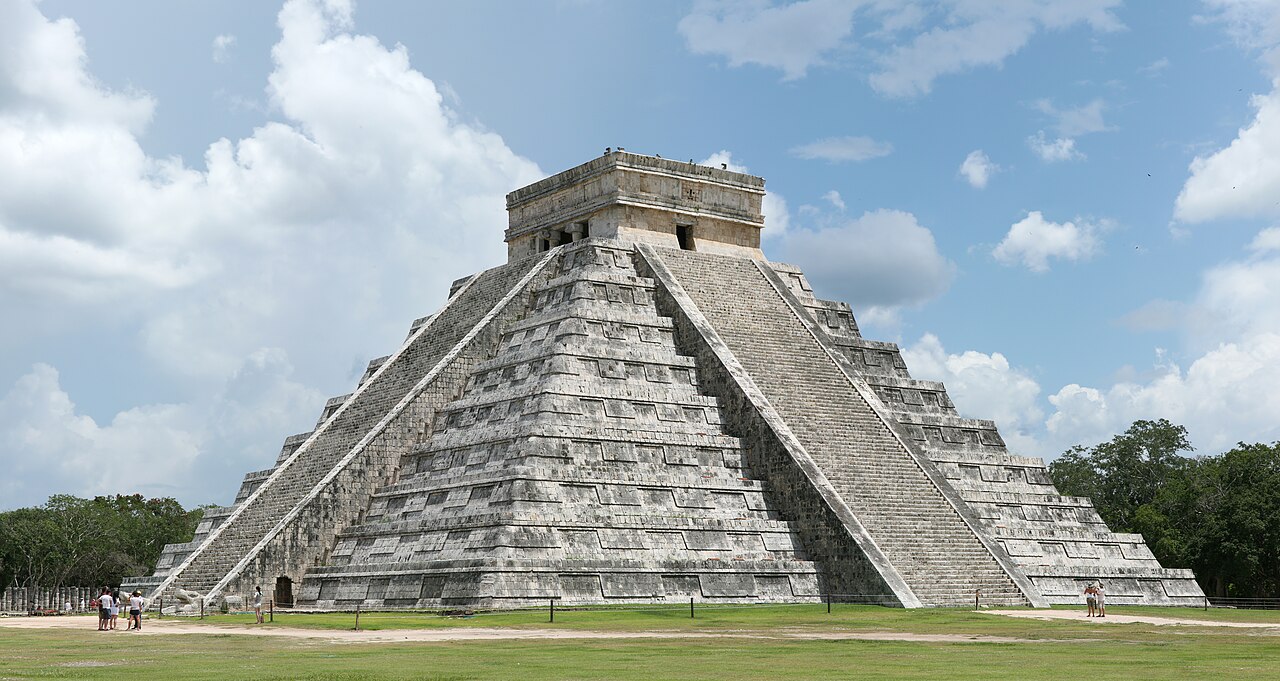
Source: Wikimedia Commons. CC BY-SA 4.0.